by Tim | Aug 18, 2012 | God, Our Culture, The Church World, The Gospel, The Holy Spirit |
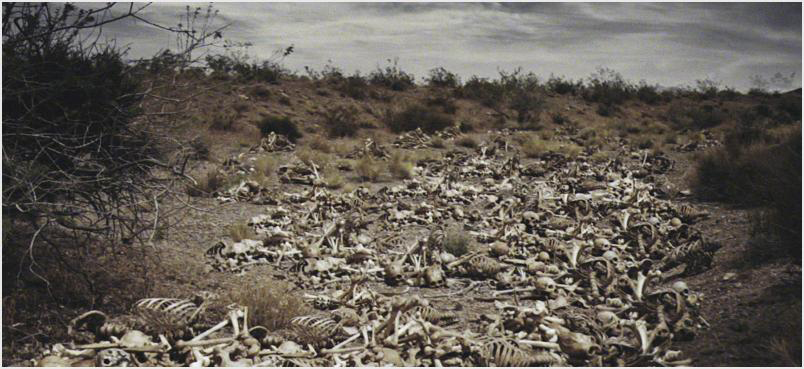
When a patient is in ICU, what family and friends want more than anything else is hope. With that in mind, there IS hope for the comatose church. But that hope isn’t in better models for doing church. Or improved leadership training. Or more money for hiring better-talented staff and starting up new programs/ministries. None of those things can revive what is almost dead. The only thing that can revive us isn’t a thing, but a Person. In Ezekiel 37, God shows the prophet Ezekiel a valley full of dry, dead bones and asks him if they can be made alive again. A person with no hope would say, “Nope.” An idiot, or a person who doesn’t fully understand the circumstances would say, “Sure, just give them some medicine!” But Ezekiel answers smartly, “God, only you know the answer to that question.” Truth is, outside of God doing anything, there is absolutely no hope for those bones. Can/will God do anything with those bones? Well, we can’t speak or make promises for God, but here’s what we CAN do: we can trust and obey God. The only hope for a comatose church is for its leaders to stop pretending things are better than they are, to stop denying the reality of the situation by trying this program or that program, or seeking answers from church leadership summits or growth seminars, but to also not give up hope and throw in the towel when they see the magnitude of the situation–but instead for these leaders to be willing to earnestly seek God, and then to trust God and obey Him....

by Tim | Aug 16, 2012 | God, Our Culture, The Church World, The Gospel, The Holy Spirit |
Audra and I are watching the TV show “Falling Skies,” and it really hasn’t been too interesting to me until the most recent episode. SPOILER ALERT!!! If you don’t watch the show, it’s about an alien invasion on earth. The overlord aliens are trying to take control of our planet. They are doing this partly by harvesting children, and turning them into an alien slave race (nicknamed “Skitters” by humans) to destroy the rest of humanity. The overlords also utilize powerful mechanical robots to destroy our civilization. Basically, the situation is hopeless. But one small regiment of humans is fighting to save and rescue the children, and to take our planet back–dealing blows here and there to the aliens. From week to week, humans are fighting against the odds, and sacrificing greatly. It’s a bleak picture, with little hope at all. But the most recent episode tells about how this regiment finds a pocket of humans who have survived underground, undetected by the invading aliens. They have actually been able to adapt to underground living very well! They grow fresh produce, sleep in comfortable beds, and are even starting to form a new democracy, since the US government has been completely wiped out. To this regiment that has just arrived, it is paradise! Utopia! Unbelievable! Peace at last. Community. Kids are going to school. Adults are working to build this new way of life. It seems perfect. That is, until the regiment tries to encourage these people to not forget about all the devastation and destruction happening on the surface. Children are being removed from their families and transformed...
by Tim | Jul 3, 2012 | God, Our Culture, The Church World, The Gospel, The Scriptures |
In my last post, I looked at the danger of emphasizing works over faith/repentance. You could say this is the fallacy of emphasizing the changing of one’s hands or feet. In this post, I want to look at the danger of emphasizing creeds/doctrines over faith/repentance. You could say this is the fallacy of emphasizing the changing of one’s mouth, or even one’s intellect. Salvation goes deeper than that–it is the changing of one’s heart. Until I started attending a United Methodist church, creeds were largely irrelevant to me, as my “branch” of Christianity hardly ever made mention of them. Some of the more liturgical branches of Christianity, however, emphasize them quite a bit. In my neck of the woods, instead of creeds being emphasized, certain doctrines were more emphasized. I see little difference between the concepts of creeds and doctrines. I will focus mainly on doctrine in this post, but I think much of this post also applies to creeds. Since I grew up “evangelical,” and still am content to be labeled as such, out of all the doctrines of the Christian faith, there is one doctrine that is primary for me: the doctrine of the Gospel (or salvation). With few exceptions, I generally am ok with disagreements on other doctrines, as long as we can agree on the Gospel. Here’s a brief definition of the Gospel for the purposes of this post: Everyone is a sinner and as a result no one deserves heaven. No one has any hope, outside of God offering forgiveness of sins. Because God is holy and just, He cannot forgive sin unless the...

by Tim | Jun 26, 2012 | God, Our Culture, The Gospel, The Scriptures |
As many people may be well aware, there has always been a tension between faith and works. Is one saved simply by believing in Jesus and repenting of their sins? Or are good works necessary for salvation? Should one be emphasized more than the other? My view can be summed up in a few sentences: True faith and repentance will naturally produce works. Therefore, anyone who claims to have put their faith in Jesus and repented of their sins ought to demonstrate such fruit. If they don’t, their claim of conversion/repentance is suspect at best. Yet, it is possible to do such “good works” without putting one’s faith in Jesus or repenting. Therefore, in the end, the emphasis for salvation should NOT be on works, but on faith and repentance. A few further thoughts/implications in regards to this theory: While it is true that true faith/repentance should produce fruit (and LOTS of it), and if fruit isn’t being produced, one’s conversion/repentance is suspect, we must also be careful not to become picky “fruit inspectors.” Jesus did say that we will know a tree by its fruit, but it’s not our job to determine someone’s salvation based on how much fruit he/she is or isn’t producing. If we have reason for concern over someone’s salvation because we don’t see what we think is adequate fruit to demonstrate such conversion, the best thing we can do is pray. In addition, we must also act based on our convictions. If someone’s life isn’t adding up to what we would expect in a converted life, we must be careful to entrust responsibility or...

by Tim | Apr 14, 2012 | God, My World |
Recently, I have been really appreciating the times that I’ve had the opportunity to pray with various people in our church. So curiously…Outside of salvation through Jesus, can anyone think of anything more beneficial to have in one’s life other than a good group of people who pray with you regularly? I’m having a hard time thinking of anything. Perhaps owning a Bible? Anything...
