by Tim | Nov 7, 2013 | God, Hell, The Gospel |
I preach a different sermon every Sunday. One of my fears is that while doing so, I’ll miss out sharing what is most important–the foundation of Christianity. What if I had only one sermon to teach people what Christianity was all about? What would the message be? It goes without saying that the central message of Christianity is Jesus. But what about Him? Well, my mind immediately goes to 1 Corinthians 13, where it says “These three remain: faith, hope, and love. And the greatest of these is love.” So it would make sense that love is Christianity in it’s most basic sense. But I’m not sure that would be accurate. Most people consider themselves loving persons. “I love God. I love my family. I even try to love people who don’t like me.” Is this person a Christian? What makes someone a Christian? Is it love? While the greatest of these is love, it is not the first thing. One of the reasons love is “the greatest of these” is that it continues on through eternity. What first separates a Christian from a non-Christian is not whether they show love or not, but whether they have faith in Jesus or not. Faith and hope, however, are only for this life. In eternity, we will see Jesus with our eyes, not by faith or hope. But while we are on this earth, what first separates a Christian from a non-Christian is not whether they show love or not, but whether they have faith in Jesus or not. I am afraid that in today’s sensibilities, we have convinced ourselves that...

by Tim | Mar 1, 2013 | God, My World, Our Culture, The Church World, The Gospel, The Holy Spirit |
Awhile back, several of us from our church made a group decision to invest heavily into a certain segment of our church. We believed that if we presented the truth of the Gospel not just in words only, but also in an extreme sacrifice of ministry to them…that there would be fruit from that–that lives would be forever changed by God’s Spirit. That isn’t what seemed to happen, and several people from the ministry team have shared their feelings of disappointment. I, too, was disappointed. What does it take for people to see the light of the Gospel, and be forever changed?? Over time, though, there have been other people in the church who have “caught the flame” of what it means to follow, serve, and love Jesus. It has been awesome to see the beginnings of this work of God in the lives of people within our church. But I keep coming back to those whom we attempted to heavily invest in. We had such great hope. And now there is a great disappointment there. Paul says in Romans 5:5, “Hope does not disappoint, because the love of God has been poured out within our hearts through the Holy Spirit who was given to us.” Although Paul says that this hope doesn’t disappoint, we might beg to differ. And sometimes, this disappointment makes you want to give up. Why? Because we all know that only God can change someone’s heart–we can’t do it. So when you give it your all, and strive to depend on God for the results, not your own abilities, and then still nothing happens…well,...

by Tim | Oct 19, 2012 | God, The Gospel, The Holy Spirit |
Let me preface what I’m about to say by stating that I believe salvation does indeed come in a moment of time, when a person repents and believes in Christ. At that very moment, the Holy Spirit comes to live inside of them, and as a result they are made holy and have become a new creation. It isn’t based on works, but it comes by faith on the basis of God’s grace. However, we have often taken this core teaching of the Gospel to an end that really is an end. And that end is destruction; not salvation. We often teach that if you come down the altar, say a prayer of repentance, and profess Christ, you are saved. Not necessarily true. We all know that to become a Christian, one needs to do two things: repent and believe in Jesus. Yet are those things “once-and-done”? Clearly not. By definition, to repent means that you change directions. To say that you turn around toward God at one instant in time, and then turn back to the world for the rest of your life–how is that repentance? That is fake repentance. Or to say that at one moment in time, you decided to trust Jesus to save you, but you don’t trust Him with your day-to-day life–how is that really trusting Jesus? To put it another way, 1 John 3:23 says, “This is His commandment, that we 1) believe in the name of His Son Jesus Christ, and 2) love one another, just as He commanded us.” Does that mean that we can simply, at one moment in time,...
by Tim | Aug 18, 2012 | God, Our Culture, The Church World, The Gospel, The Holy Spirit |
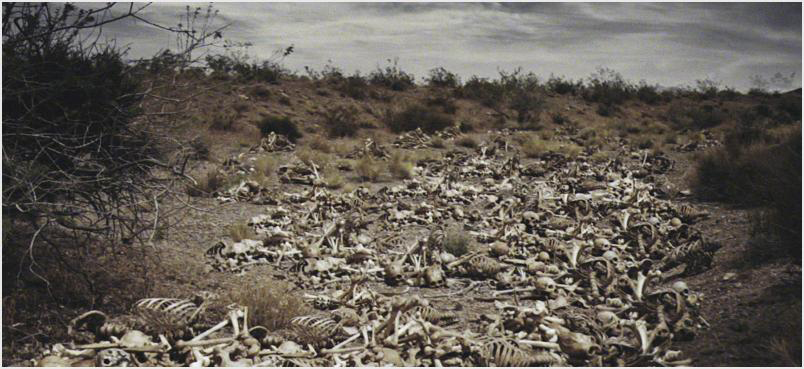
When a patient is in ICU, what family and friends want more than anything else is hope. With that in mind, there IS hope for the comatose church. But that hope isn’t in better models for doing church. Or improved leadership training. Or more money for hiring better-talented staff and starting up new programs/ministries. None of those things can revive what is almost dead. The only thing that can revive us isn’t a thing, but a Person. In Ezekiel 37, God shows the prophet Ezekiel a valley full of dry, dead bones and asks him if they can be made alive again. A person with no hope would say, “Nope.” An idiot, or a person who doesn’t fully understand the circumstances would say, “Sure, just give them some medicine!” But Ezekiel answers smartly, “God, only you know the answer to that question.” Truth is, outside of God doing anything, there is absolutely no hope for those bones. Can/will God do anything with those bones? Well, we can’t speak or make promises for God, but here’s what we CAN do: we can trust and obey God. The only hope for a comatose church is for its leaders to stop pretending things are better than they are, to stop denying the reality of the situation by trying this program or that program, or seeking answers from church leadership summits or growth seminars, but to also not give up hope and throw in the towel when they see the magnitude of the situation–but instead for these leaders to be willing to earnestly seek God, and then to trust God and obey Him....

by Tim | Aug 16, 2012 | God, Our Culture, The Church World, The Gospel, The Holy Spirit |
Audra and I are watching the TV show “Falling Skies,” and it really hasn’t been too interesting to me until the most recent episode. SPOILER ALERT!!! If you don’t watch the show, it’s about an alien invasion on earth. The overlord aliens are trying to take control of our planet. They are doing this partly by harvesting children, and turning them into an alien slave race (nicknamed “Skitters” by humans) to destroy the rest of humanity. The overlords also utilize powerful mechanical robots to destroy our civilization. Basically, the situation is hopeless. But one small regiment of humans is fighting to save and rescue the children, and to take our planet back–dealing blows here and there to the aliens. From week to week, humans are fighting against the odds, and sacrificing greatly. It’s a bleak picture, with little hope at all. But the most recent episode tells about how this regiment finds a pocket of humans who have survived underground, undetected by the invading aliens. They have actually been able to adapt to underground living very well! They grow fresh produce, sleep in comfortable beds, and are even starting to form a new democracy, since the US government has been completely wiped out. To this regiment that has just arrived, it is paradise! Utopia! Unbelievable! Peace at last. Community. Kids are going to school. Adults are working to build this new way of life. It seems perfect. That is, until the regiment tries to encourage these people to not forget about all the devastation and destruction happening on the surface. Children are being removed from their families and transformed...
by Tim | Jul 3, 2012 | God, Our Culture, The Church World, The Gospel, The Scriptures |
In my last post, I looked at the danger of emphasizing works over faith/repentance. You could say this is the fallacy of emphasizing the changing of one’s hands or feet. In this post, I want to look at the danger of emphasizing creeds/doctrines over faith/repentance. You could say this is the fallacy of emphasizing the changing of one’s mouth, or even one’s intellect. Salvation goes deeper than that–it is the changing of one’s heart. Until I started attending a United Methodist church, creeds were largely irrelevant to me, as my “branch” of Christianity hardly ever made mention of them. Some of the more liturgical branches of Christianity, however, emphasize them quite a bit. In my neck of the woods, instead of creeds being emphasized, certain doctrines were more emphasized. I see little difference between the concepts of creeds and doctrines. I will focus mainly on doctrine in this post, but I think much of this post also applies to creeds. Since I grew up “evangelical,” and still am content to be labeled as such, out of all the doctrines of the Christian faith, there is one doctrine that is primary for me: the doctrine of the Gospel (or salvation). With few exceptions, I generally am ok with disagreements on other doctrines, as long as we can agree on the Gospel. Here’s a brief definition of the Gospel for the purposes of this post: Everyone is a sinner and as a result no one deserves heaven. No one has any hope, outside of God offering forgiveness of sins. Because God is holy and just, He cannot forgive sin unless the...
